Mouth Opening surgery
What is Mouth Opening Surgery?
Mouth opening surgery is a procedure done to treat conditions where a person cannot open their mouth properly (restricted mouth opening). This condition is commonly called trismus and is often associated with Oral Submucous Fibrosis in India. The surgery helps release tight tissues, improve jaw movement, and restore normal function.
Common Causes
- Oral Submucous Fibrosis (due to gutka/pan masala habits)
- Infection or trauma
- Post-surgical scarring
- Radiation therapy side effects
- Temporomandibular joint (TMJ) disorders
Symptoms
- Difficulty opening mouth fully
- Pain or stiffness in jaw
- Burning sensation in mouth
- Difficulty eating or speaking
- Tightness in cheeks
Types of Mouth Opening Surgery
1. Fibrotic Band Release
- Removal of tight fibrous bands inside the mouth
- Common in OSMF patients
2. Coronoidectomy
- Removal of a part of the jaw bone (coronoid process)
- Improves jaw mobility
3. Grafting (Reconstruction)
- Tissue graft (like buccal fat pad or skin graft) used after release
- Prevents re-tightening
Procedure Overview
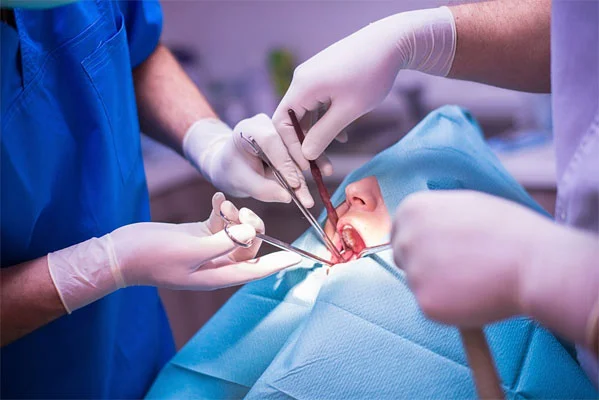
- Performed under local or general anesthesia
- Fibrous tissues are surgically released
- Mouth opening is gradually increased
- Graft may be placed if needed
- Physiotherapy starts soon after surgery
Recovery & Aftercare
- Mild swelling and discomfort for a few days
- Regular mouth opening exercises are very important
- Soft diet for initial days
- Avoid spicy foods and tobacco
- Follow-up visits required
Importance of Physiotherapy
Surgery alone is not enough. Daily exercises are crucial to maintain results.
- Wooden spatula / mouth opener exercises
- Jaw stretching routines
- Consistency = success
FAQs
No, it is done under anesthesia. Mild pain after surgery is manageable.
It depends on severity, but significant improvement is usually achieved.
Yes, if exercises are not followed or habits continue.
Initial recovery is 1–2 weeks, but full improvement needs regular exercises for months.