
Dental Implant
What are dental implants?
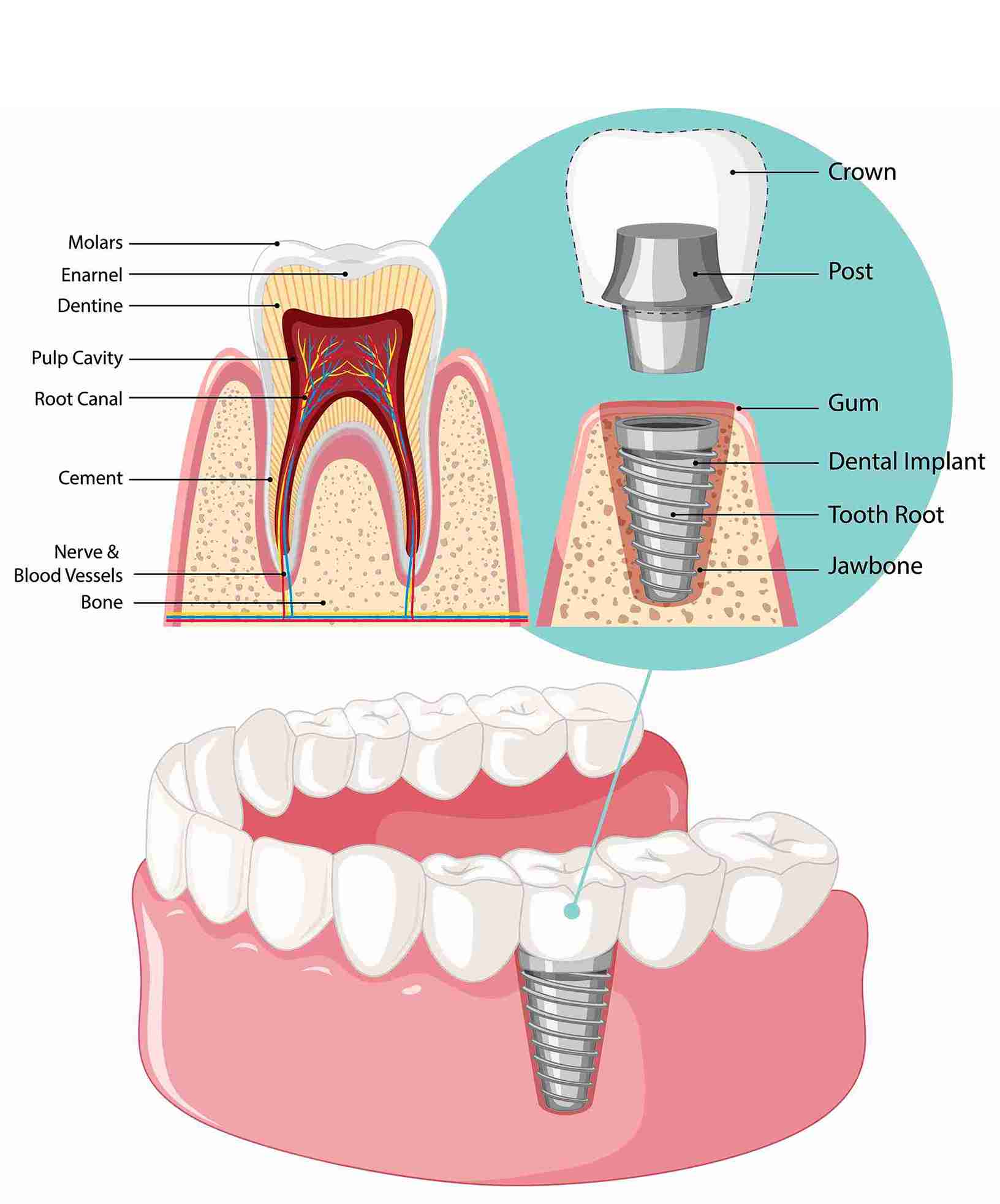
Dental implants are small, threaded posts that surgically replace missing teeth. In addition to filling in gaps in your smile, dental implants improve chewing function and overall oral health. Once healed, implants work much like natural teeth.
A dental implant has three main parts
- Threaded post
- Abutment
- Restoration
Who Needs Dental Implants?
- Missing single tooth
- Multiple missing teeth
- Full mouth tooth loss
- Loose dentures
Recommendations for Patients
Before choosing dental implants, it is important to discuss with your dental provider about the benefits, risks, and your suitability for the procedure.
Things to Consider
- Your overall health plays a key role in healing and long-term success
- Ask your dentist about the implant brand and model used and keep it for your records
- Smoking can slow healing and reduce implant success rate
- Healing time may take a few months, during which a temporary solution is provided
After the Dental Implant Procedure
- Follow proper oral hygiene instructions given by your dentist
- Clean implants and surrounding teeth regularly
- Visit your dentist for regular check-ups
- If you feel pain or looseness, contact your dentist immediately
Benefits & Risks of Dental Implants
Dental implants can greatly improve both oral health and quality of life, but like any procedure, they come with certain risks.
Benefits of Dental Implants
- Restores ability to chew properly
- Improves appearance and smile confidence
- Prevents jawbone loss
- Maintains healthy gums and surrounding bone
- Keeps nearby teeth stable
- Enhances overall quality of life
Risks Associated with Dental Implants
- Damage to nearby teeth during placement
- Injury to tissues (e.g., sinus issues)
- Rare cases of jawbone fracture during surgery
- Bite alignment issues after placement
- Implant or screw becoming loose
- Implant failure due to:
- Infection
- Poor healing (especially in smokers)
- Uncontrolled diabetes
- Difficulty maintaining hygiene around implant
- Untreated gum disease
- Temporary or permanent numbness due to nerve impact
Important Safety Note
Always inform your healthcare provider if you have dental implants before undergoing MRI or X-ray scans, as implants may interfere with imaging.
FAQs
The complete dental implant process usually takes 3 to 6 months. This includes implant placement, healing time (osseointegration), and final crown placement. In some cases, it may take longer depending on bone condition and treatment complexity.
The procedure is performed under local anesthesia, so you won’t feel pain during surgery. After the procedure, mild discomfort or swelling may occur, which can be managed with prescribed medication. Most patients find it less painful than expected.
With proper care and good oral hygiene, dental implants can last 10 to 25 years or even a lifetime. Regular dental check-ups and maintenance are essential for long-term success.