
Jaw Fractures
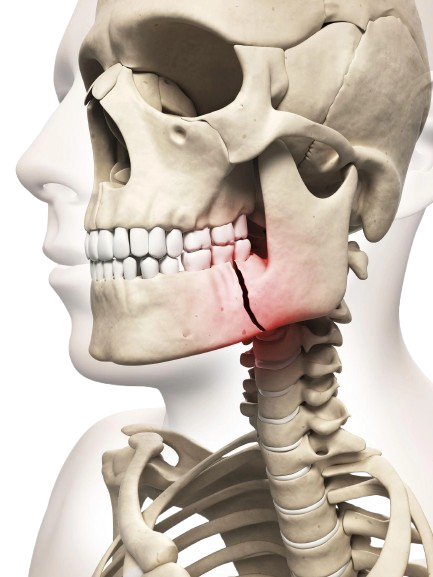
Expert Care for Facial Trauma & Jaw Injuries
Jaw fractures can be painful and affect your ability to eat, speak, and function normally. Our expert team provides fast diagnosis and advanced treatment to restore your jaw safely and effectively.
What is a Jaw Fracture?
A jaw fracture is a break or crack in the jawbone, most commonly affecting the lower jaw (mandible). It usually occurs due to trauma or injury and requires timely treatment to restore proper function and alignment.
Causes of Jaw Fracture
Jaw fractures are usually caused by strong impact or trauma, such as:
- Road traffic accidents
- Falls or slips
- Sports injuries
- Physical assault or accidents
Signs & Symptoms
Common symptoms of a jaw fracture include:
- Severe pain and swelling in the jaw
- Difficulty opening or closing the mouth
- Misaligned teeth (bite problems)
- Bleeding from the mouth
- Loose or damaged teeth
- Numbness in lips or chin
- Visible facial deformity
Diagnosis
Proper diagnosis is essential for effective treatment. Our process includes:
- Detailed clinical examination
- Digital X-rays (OPG)
- Advanced CT scan for complex cases
Treatment Options
Treatment depends on the severity and location of the fracture:
1. Closed Reduction (Non-Surgical)
In minor cases, the jaw may be stabilized using wiring techniques to allow natural healing.
2. Open Reduction & Internal Fixation (ORIF)
In more severe fractures, small plates and screws are used to fix the bone in its correct position.
Why Choose Us?
- Experienced oral and maxillofacial specialists
- Advanced diagnostic technology
- Safe and precise surgical care
- Emergency treatment available
- Patient-focused approach
Recovery & Aftercare
Recovery plays an important role in healing:
- Swelling usually reduces within 1–2 weeks
- Soft diet is recommended during healing
- Regular follow-up visits are important
- Complete healing may take a few weeks
FAQs
Yes, it can cause significant pain and discomfort, especially while eating or speaking.
Most jaw fractures heal within 4 to 6 weeks, depending on severity.
Not always. Minor fractures may heal without surgery, but severe cases require surgical treatment.
Initially, a soft or liquid diet is recommended. Normal eating gradually resumes after healing.
The cost depends on the type and severity of the fracture and treatment required.